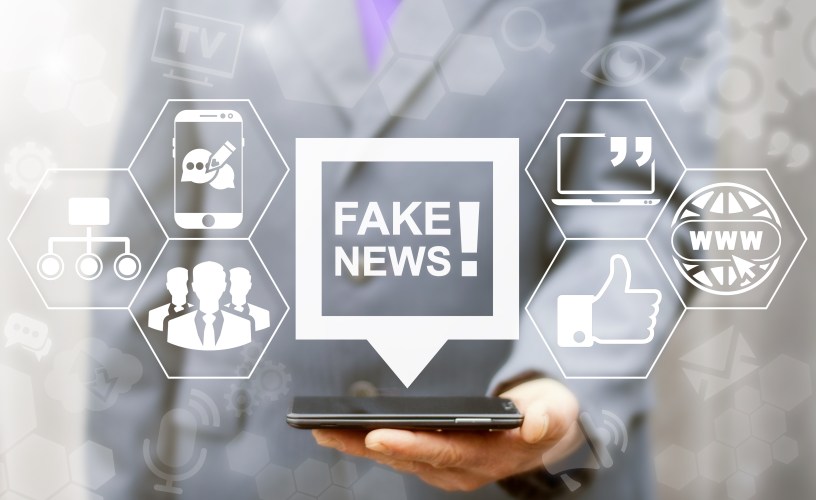
Fake news has become extremely popular. US President, Donald Trump is known for classifying, many of the news reports with this label, especially when it is related to him and it is not so positive. That tactic has not deterred newspaper and cable news from pouring over his mishaps. The kind of fake news and information, however, that plagues the internet is what has created a grave concern for this post. Some of the most fallacious, absurd and insidious material circulate through chain messages (the ones that always threaten you to “pass it on or else…”)and fake websites—that are sometimes rigged with malware or viruses. This kind of misleading construct has lead “a North Carolina man to bring a gun into a popular Washington, D.C. pizza restaurant under the impression that it was hiding a child prostitution ring.”[1]
You see, fake news is a test of our ability to discern truth or error. According to 1 John 4:1: Beloved, believe not every spirit, but try the spirits whether they are of God: because many false prophets are gone out into the world. Therefore this article will seek to look at the implications of buying into falsified information, the psychology of those who assimilate these errors and what the scriptures tell us about our need to possess a “discerning spirit”.
Now, fake news can easily be traced if due diligence is done by the recipient. It usually comes across in a very convincing fashion and seeks to carry stamps of legitimacy in order to gain the respect of the critical social media user, but it can still be exposed for what it is– a lie. Over the past few decades, since the internet has become a main source of contact and disseminating information, crafty individuals have been very witty to engage the wandering thoughts of Web surfers in things that teeter on the edge of truth and have created serious apprehensions, undue fear, hate, anger and the continuation of legends. According to the Business Insider: “Since the November 2016 US presidential election, Facebook and other tech companies have taken some steps to try and deal with the problem. Facebook has integrated fact-checking organizations into its platform to flag up disputed stories, while Google has kicked sites peddling fake news off its ad network — depriving them of revenue, and on Friday added a fact check feature to its Search and News tools.”[2] When Internet giants have to respond this way, it tells you that this is serious stuff, that requires alertness on the part of web-users. Without such assistance, however, the internet user and Christians, in particular, should be vigilant.
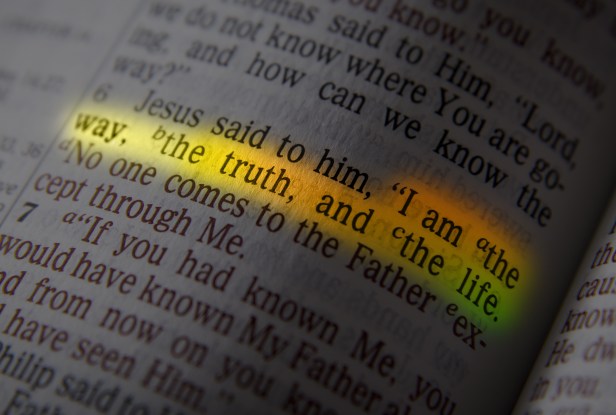
“Alternative facts”, as it is referred to these days, have gained reactions by many, that give the sense that we might be a little bit too gullible than we should be. The believer in the Bible, considers the word of God the truth and embrace a Biblical principle, that “To the law and to the testimony, if they speak not according to this word, it is because there is no light (truth) in them.” (Isaiah 8:20) As fervent students of the ‘Word’, holding to the mantra of 2 Timothy 3:16, “All scripture [is] given by inspiration of God, and [is] profitable for doctrine (a system of belief or dissecting truth from error)…” we are called upon to be thorough. Interestingly, Jesus declared the Bible as the “truth” (John 17:17). Indeed, we have a clear measurement of genuine versus non-genuine, as the word ‘canon’ denotes: “rule or standard”[3] The discipline of allowing the scriptures to be the guidepost or a “lamp unto [our] feet: and a light unto [our] path” (Psalm 119:105) should help us to be even more rigid when interfacing with material from the Web. It would seem, however, that no one is immune to being sucked in by fake news—not even diligent servants of the scriptures.
One could say that the sensationalism that attends these ‘shares’ are what carry the swing and not verity of what is being said. The Oxford Dictionary has derived a word for this phenomenon called: “post-truth”, which means “Relating to or denoting circumstances in which objective facts are less influential in shaping public opinion than appeals to emotion and personal belief.”In modern times, we have developed so great an appetite for the ‘sensational’ that we sometimes evict reason, courtesy, and respect, just to induce a click of the like button on our posts or to revel in someone’s demise over the web. For example, sensationalism will drive a passer-by to capture, on a smart device, an accident scene or even an assault, while making no effort to render any assistance to those who are in distress. Of course, this is not an isolated matter. The Jamaican law-enforcement authorities have warned persons to desist from posting scenes from, accident scenes, especially where serious casualties have occurred or worst, fatalities—yes, people really do that. The authorities have also, charged a few women, for posting allegations about their ex-boyfriends on the internet, making them out to be criminals in the minds of gullible social media users. The emotions that are called on in these scenes can result in trauma, feelings of hate and bitterness, unduly.
This kind of willing absorption and careless posting of information on social media platforms is alarming. However, it speaks to other underlying issues in our psyche. Social psychologists use a phrase called, Naïve realism, that may help us to understand, why people, in general, respond to fake news this way. According to Psychology Today: “Naive realism is the notion that people tend to perceive themselves as objective perceivers and thinkers, in relation to both the social and physical worlds. So, when we hear or see something consistent with our beliefs, there is a tendency to believe it.” Now, the expression speaks volumes to what we may observe in the general response to fake news. Naïve speaks to our lack of thorough knowledge on a subject, while realism denotes something that exists. What this says is that, if the subject matter of the fake news, sounds close to what we expect of a thing or person, we tend to believe it without careful examination or critique. This article will not expend much to unearth the etymology of this phrase because it is self-explanatory. The takeaway here is that whatever we read on the internet, must go through a filter, that seeks to determine whether something is real or fake.
Psychologists have summed-up the cause; now from a Christian standpoint, there lies a challenge to the way we think. Could it be that we are more inclined to hop a speeding wagon of fake, over-sensationalized information or will reason and sound judgment be utilized when faced with material on the Web? David, in his penitence, over falling down on the Bathsheba/Uriah-issue asked for a “right spirit” (Psalm 51:10); it was a spirit of good judgment or rational thinking that he was seeking. Solomon asked for an “understanding heart” (1 Kings 3:9). James called his listeners to request wisdom, where it is lacking: “If any of you lack wisdom, let him ask of God, that giveth to all men liberally” (James 1:5). Joseph, the ‘Dreamer’, was “a man in whom the Spirit of God [was]” (Genesis 41:38). Hebrews 5:14 notes: “But strong meat belongeth to them that are of full age, [even] those who by reason of use have their senses exercised to discern both good and evil.” Now in 1 Corinthians 12:10 we find, among the many gifts, this insertion: the “discerning of spirits;” The lack of diligence of thought when dissecting fake media, is also an indicator as to how we interpret and apply the Truth—God’s word. 2 Timothy 4:3,4 states: “For the time will come when they will not endure sound doctrine; but after their own lusts shall they heap to themselves teachers, having itching ears; And they shall turn away [their] ears from the truth, and shall be turned unto fables.” This lack of sobriety should raise alarm bells among our teachers of the word and the students of scripture.
We can stand firmly on the word of God, because he has affirmed it, with his blood and with our salvation—manifested in the transformed lives of millions through the centuries and today. According to Peter: “We have also a more sure word of prophecy; whereunto ye do well that ye take heed, as unto a light that shineth in a dark place, until the day dawn, and the day star arise in your hearts: Knowing this first, that no prophecy of the scripture is of any private interpretation.” 2 Peter 1:19, 20 Our confidence must never be shaken in the truth, God’s word can be trusted. Our confidence must never be shaken in the truth; God’s word can be trusted. However, we do not just read the Bible, we also browse the internet, scour Facebook, scroll through messaging platforms and ingest materials that may, at face value, appear to be true from these sources. Can we really discern fake from real? Our ability to determine accuracy in this area is a reflection of how we deconstruct the scriptures and give heed to ‘spirits’ (1 John 4:1).
Donald Trump’s measurement of fake news is not the measuring rod we should use, it is our willingness to be thorough and critical in our thinking. Our response to the teachings of the scripture, as to fake news, when presented, requires the same discernment.
[1] Michael Barthel, Amy Mitchell & Jesse Holcomb “Many Americans Believe Fake News Is Sowing Confusion” Journalism.com http://www.journalism.org/2016/12/15/many-americans-believe-fake-news-is-sowing-confusion/ (Accessed: May 19, 2017)
[2] Rob Price, “Facebook will now teach you how to spot fake news” The Business Insider http://www.businessinsider.com/facebook-how-to-spot-fake-news-2017-4 (Accessed: May 19, 2017)
[3] A.J. Kostenberger et. al., The Cradle, The Cross and The Crown: An Introduction to the New Testament (Nashville: B&H Academic, 2009), 3
[4] Nathan A. Heflick Psychology Today, https://www.psychologytoday.com/blog/the-big-questions/201703/why-we-often-believe-fake-news (Accessed May 19, 2017)
[5] Beloved, believe not every spirit, but try the spirits whether they are of God: because many false prophets are gone out into the world.
 Preserved for A Purpose